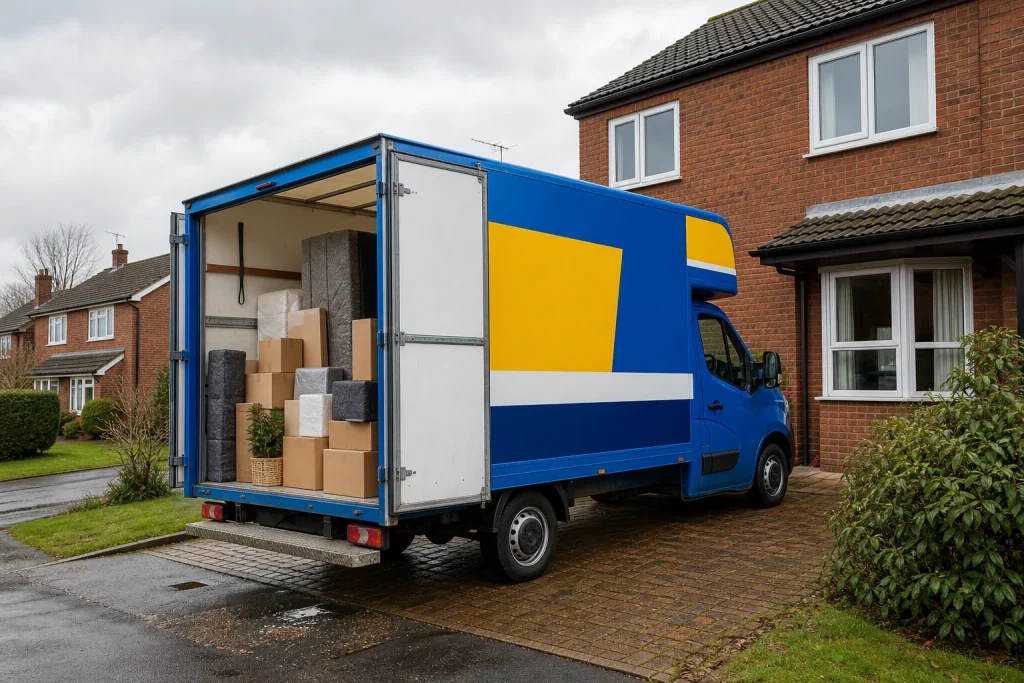
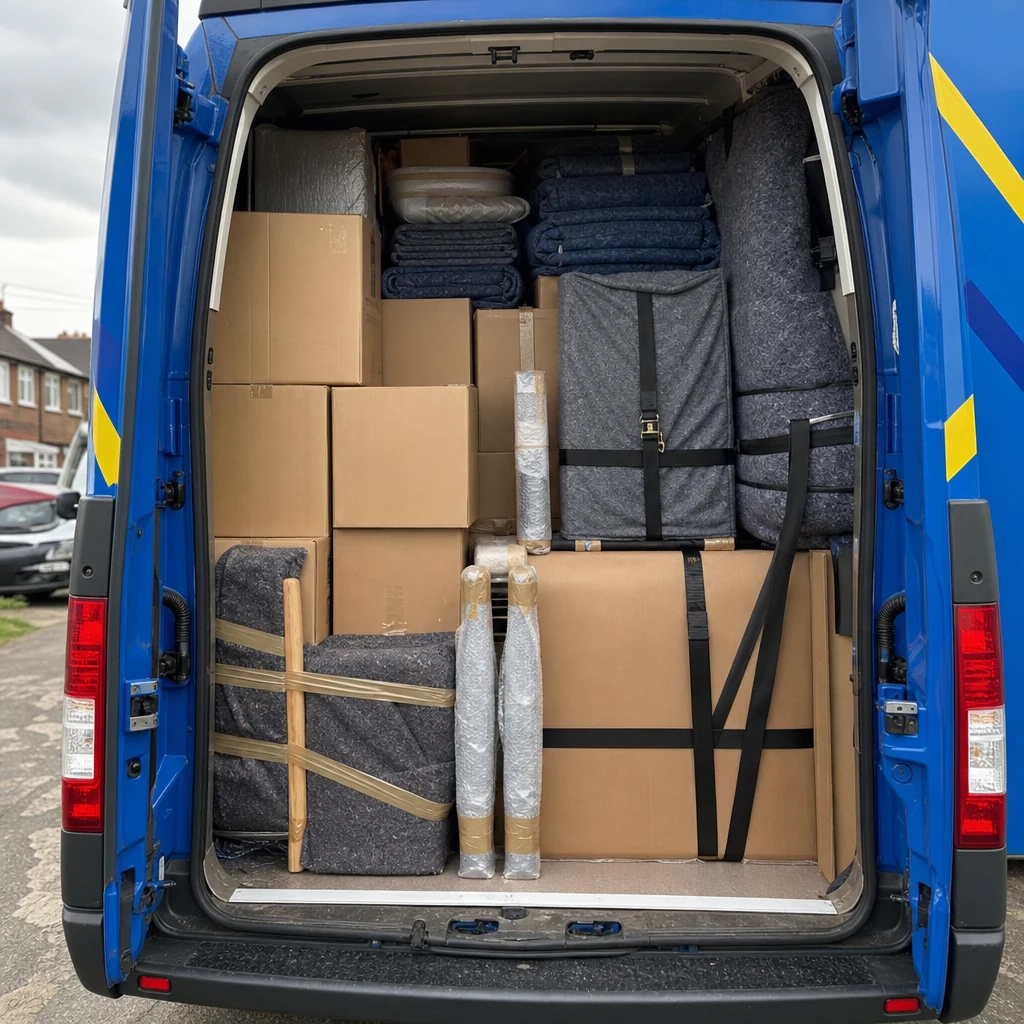
Picture a bright blue box removals van outside your home on an overcast morning, yellow and white removals and storage branding clear on the side, ready for a longer journey rather than a quick trip across nearby streets.
A long distance move is not simply a local move with more miles added. It needs a clearer plan, stronger preparation and careful coordination at both ends so everything arrives safely and in the right order.
Distance changes how the move is planned
With a local move, there is often a little more room for flexibility. If something has been left behind, a return journey may be realistic. If access is delayed, the crew may be able to adjust the order of work more easily. A longer move benefits from a more structured approach because the vehicle, team, keys, travel time and unloading window all need to line up.
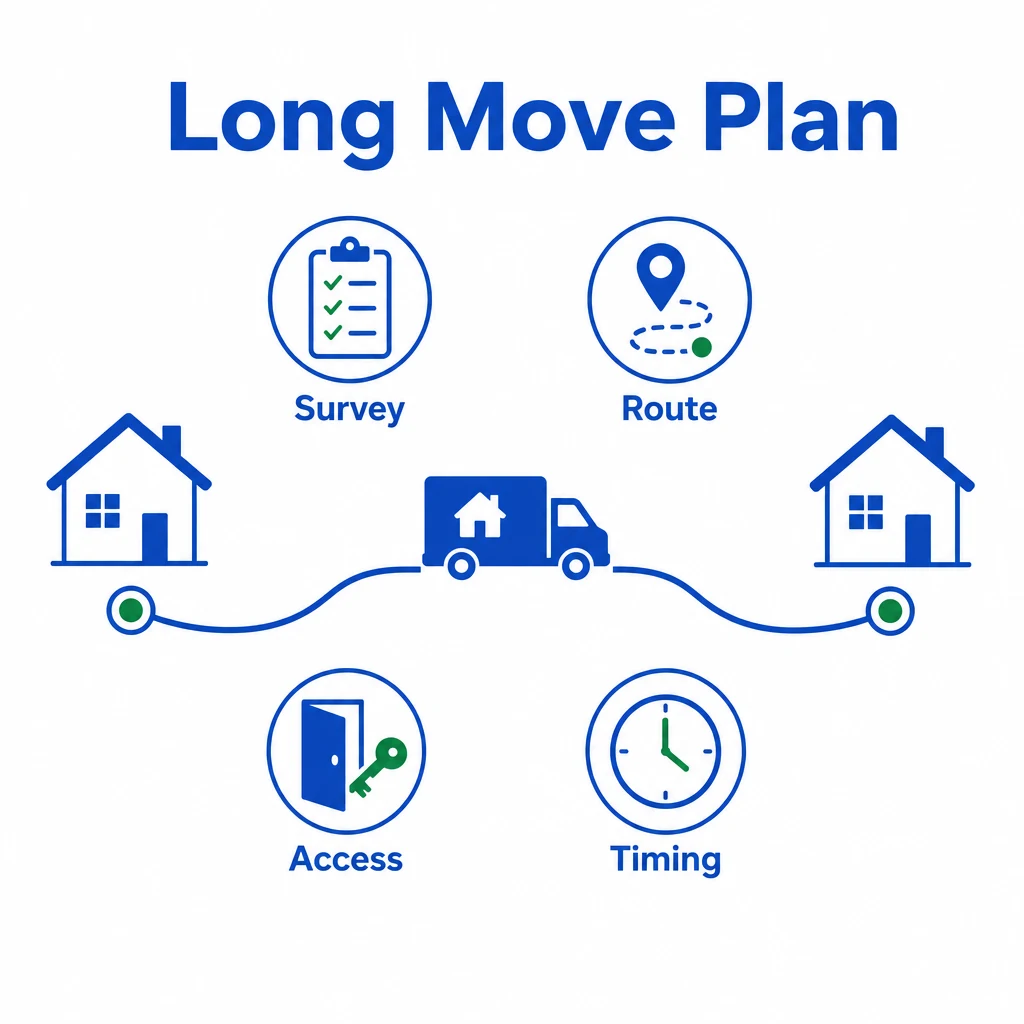
Good planning starts with a proper inventory. This does not need to be complicated, but it should be accurate. Large furniture, fragile items, garden equipment, loft contents, garage items and anything needing dismantling should be noted before move day. This helps the removals team plan the right vehicle space, protective materials and loading method.
It is also worth agreeing what will travel with you personally. Important documents, medication, chargers, basic overnight items and valuables are usually best kept separately. For a clearer idea of how professional support works for bigger journeys, see the long distance moves service.
Loading order matters more on a longer journey
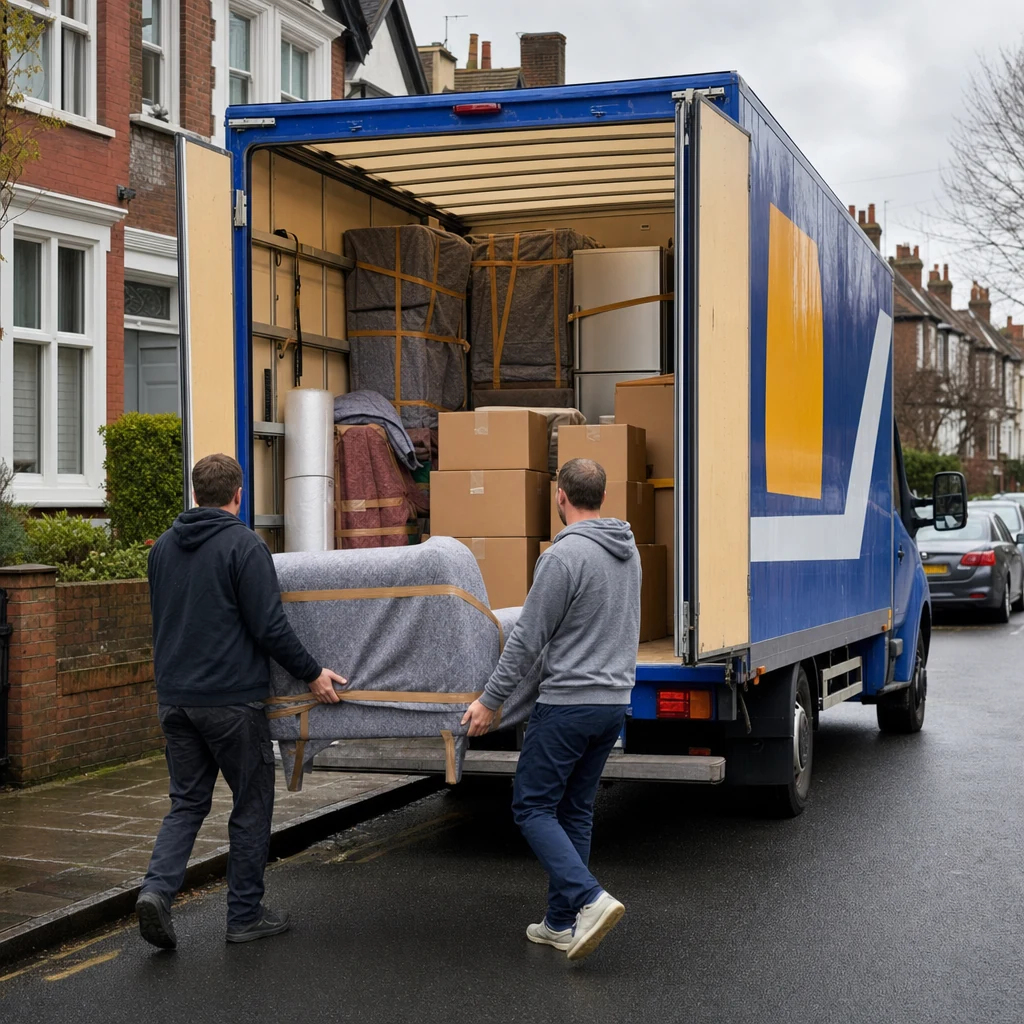
The way a removals vehicle is loaded is always important, but it becomes even more significant over a longer distance. Items need to be positioned so they are stable throughout the journey, protected from pressure points and easy to unload in a sensible order at the new property.
Heavy furniture is usually loaded to create a secure base. Sofas, mattresses, appliances and larger boxes may then be arranged so weight is balanced and movement is reduced. Fragile or awkward items need careful placement, not just a label. The aim is to avoid unnecessary handling, keep walkways safe during unloading and make sure essential items can be reached when needed.
If specialist items are involved, they should be discussed early. A piano, for example, needs different planning from standard furniture because of its weight, shape and sensitivity. If this applies to your move, the dedicated piano moves information is a useful starting point.
A simple room-by-room labelling system helps too. Labels such as main bedroom, kitchen, study or loft are more useful than vague notes. If boxes are needed first on arrival, mark them clearly as priority items.
Packing standards need to suit a longer journey
Packing for a long distance move is about protection, not just getting everything into boxes. Items may spend longer in transit, and the vehicle may travel over a wider mix of roads. Strong boxes, secure seals, sensible weight limits and good internal cushioning all make a difference.
Books, tools and kitchenware should be packed into smaller, stronger boxes so they can be carried safely. Lamps, mirrors, artwork and glassware need suitable wrapping and clear marking. Clothing, bedding and soft furnishings should be packed so they stay clean and dry, especially if loading or unloading takes place in typical changeable weather.
A professional packing service can be helpful when you want consistent materials and experienced handling across a whole home. If you prefer to pack some or all of your belongings yourself, the packing tips section offers practical guidance on preparing boxes properly.
One of the most useful steps is to prepare an essentials box. This might include a kettle, mugs, basic food, toiletries, a change of clothes, pet supplies and bedding for the first night. Load it so it can be found quickly at the new property.
Journey timing and access need checking at both homes
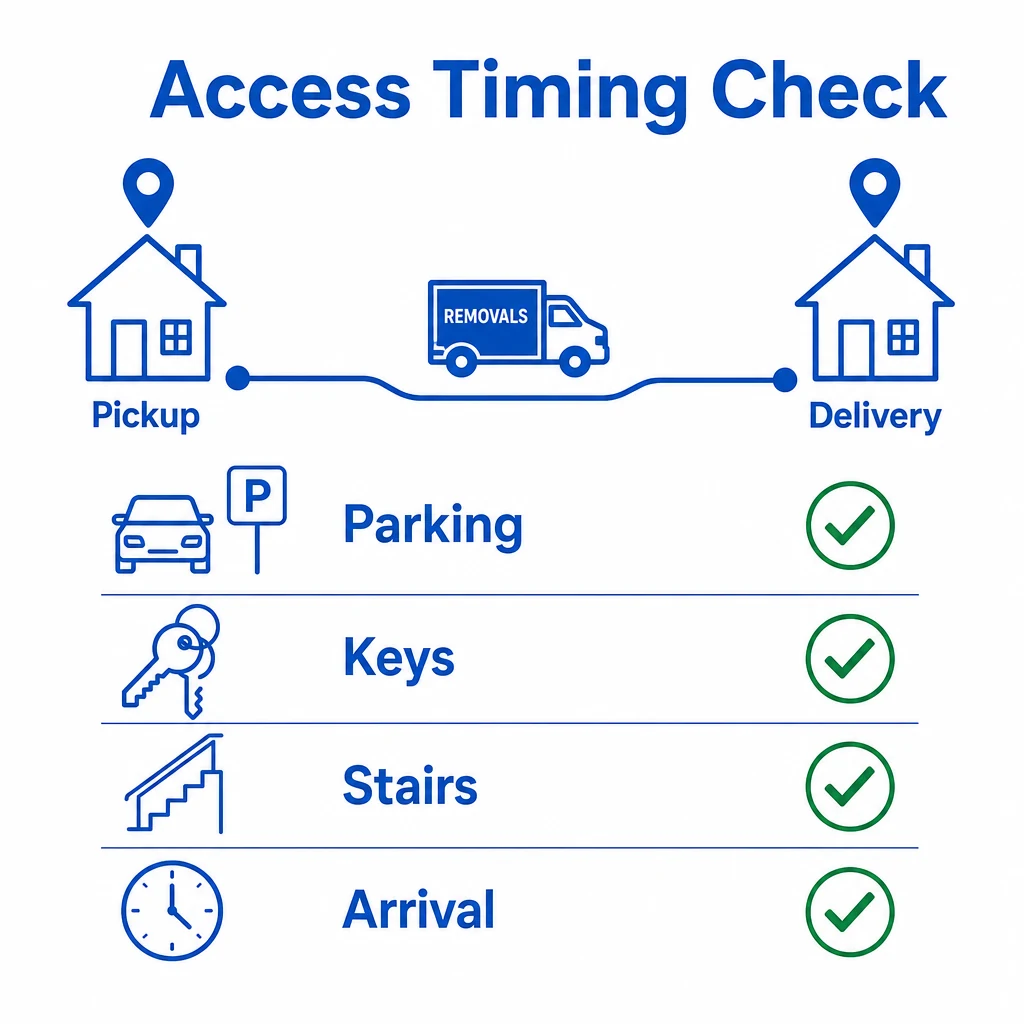
Longer moves depend on timing. The removals team needs to consider loading time, traffic patterns, rest periods, arrival arrangements and the point at which keys become available. This is why clear communication before the day is so valuable.
Access should be checked at both properties. A wide driveway at one end does not guarantee easy unloading at the other. Consider whether the removals van can park close to the entrance, whether there are narrow lanes or tight turns, and whether there are steps, lifts, shared entrances or parking restrictions. If there are gates, low branches, steep slopes or limited turning space, mention them early.
It is also helpful to think about the order in which rooms will be needed. Beds, cot furniture, kitchen essentials and work equipment may need to be accessible sooner than stored seasonal items. A floor plan or quick room list can help the crew place items where they belong rather than leaving you to rearrange everything later.
For more preparation ideas beyond the move itself, Norman Ferns shares practical moving tips and wider updates in the news section.
Why professional removals are the safer option
Long distance removals bring together packing, lifting, loading, driving, scheduling and careful unloading. Professional removals support helps bring those parts into one coordinated plan. Instead of relying on multiple car trips, borrowed vehicles or improvised packing, you have a team used to handling household goods securely from one door to the next.
That experience matters when furniture needs dismantling, fragile items need extra care, or access is not straightforward. It also reduces unnecessary lifting for you and helps protect both belongings and property. Door frames, walls, stairs and floors all benefit from careful handling, especially when larger items are being moved through tighter spaces.
A reputable removals company will also ask useful questions before the move. They may want to know about volume, access, fragile items, parking, storage needs and any timing requirements. These questions are not formalities; they are how a safe, practical move is built.
If you value working with an established removals firm, you can learn more about the company background on the our history page.
- Long distance moves need more structured planning than shorter local moves.
- Loading order, box strength and clear labelling all help protect belongings in transit.
- Access, parking and timing should be checked at both properties before move day.
- Professional removals make longer journeys safer, smoother and better coordinated.
Frequently asked questions
How early should I start planning a long distance move?
Start as soon as you know the likely moving date. Early planning gives time to confirm access, review what is being moved, arrange packing support if needed and identify any specialist items.
Can I pack my own belongings for a long distance removal?
Yes, but use strong boxes, avoid overfilling them and protect fragile items properly. If you are unsure, professional packing can give extra reassurance for valuable or delicate belongings.
What should I tell the removals company before moving day?
Share details about parking, stairs, lifts, narrow access, large furniture, fragile items, dismantling needs and anything that must be unloaded first.
Why is loading order so important?
A good loading order helps keep weight balanced, protects fragile items and makes unloading more efficient when the van reaches your new home.
Planning a longer move?
Speak to Norman Ferns for friendly, practical guidance and a removals plan built around your journey.