Moving house is stressful enough without struggling to get a bed through a doorway or damaging your furniture on the stairs. That’s why learning how to disassemble furniture for a move is one of the most practical things you can do before moving day.
In this guide, we walk you through a simple and safe process. We explain what to take apart, what tools you need, and how to pack everything so it arrives in good condition. Whether you are moving yourself or using professionals, this will help you avoid common mistakes and save time.
What does furniture disassembly mean?
Furniture disassembly simply means breaking large items into smaller parts so they are easier to carry, load, and transport.
This is especially useful for:
- Beds and wardrobes
- Large sofas
- Dining tables
- Office desks
It reduces the risk of damage and makes moving through tight spaces much easier.
Why is disassembling furniture important before moving?
If you skip this step, you may face problems that slow down your move.
Large furniture can:
- Get stuck in doorways or staircases
- Cause scratches on walls and floors
- Break under pressure when lifted awkwardly
Taking furniture apart solves these issues. It also makes loading the van more efficient and keeps your items safer.
Tools needed to disassemble furniture
Before you begin, gather the right tools. This saves time and avoids frustration halfway through the job.
Most furniture can be taken apart using:
- Screwdrivers (flat-head and Phillips)
- Allen keys
- Adjustable spanner
- Rubber mallet
- Zip bags or small containers
- Marker pen and masking tape
Having everything ready means you can work smoothly without stopping.

Step-by-step: How to disassemble furniture for moving
We always recommend following a clear system. This helps you stay organised and makes reassembly much easier later.
Step 1: Prepare your space
Clear the area around the furniture item. Give yourself enough room to move safely. Good lighting also helps you spot screws and fittings.
Step 2: Take photos before you start
Before removing anything, take a few quick photos. Capture joints, screws, and how parts connect. These will act as a guide when you rebuild later.
Step 3: Remove loose and external parts first
Start with the easiest parts:
- Cushions
- Shelves
- Drawers
- Doors
This reduces weight and gives you better access to the main structure.
Step 4: Unscrew and separate main components
Now move on to the main frame. Work slowly and remove screws or bolts one at a time. Avoid forcing anything, as this may cause damage.
Step 5: Label and store all hardware
Place screws and small parts into labelled bags. Write the furniture name on each bag. If possible, tape the bag to the matching item. This is the best way to avoid losing anything.
Step 6: Wrap and protect each part
Once disassembled, wrap each piece using bubble wrap or blankets. Pay extra attention to corners and edges, as these are most likely to get damaged.
How to dismantle common furniture items
Different items require slightly different approaches. Here is how to handle the most common ones.
How to dismantle a bed frame for moving
Remove all bedding first. Then:
- Take out slats or supports
- Unscrew the side rails
- Detach the headboard and footboard
Keep all bolts together. Beds are one of the most important items to reassemble quickly, so organisation matters here.
How to disassemble a sofa for moving
Not all sofas come apart, but many do.
- Remove cushions and loose covers
- Unscrew legs if possible
- Check for detachable sections or clips
If the sofa does not come apart, protect it well before moving.
Tables and desks
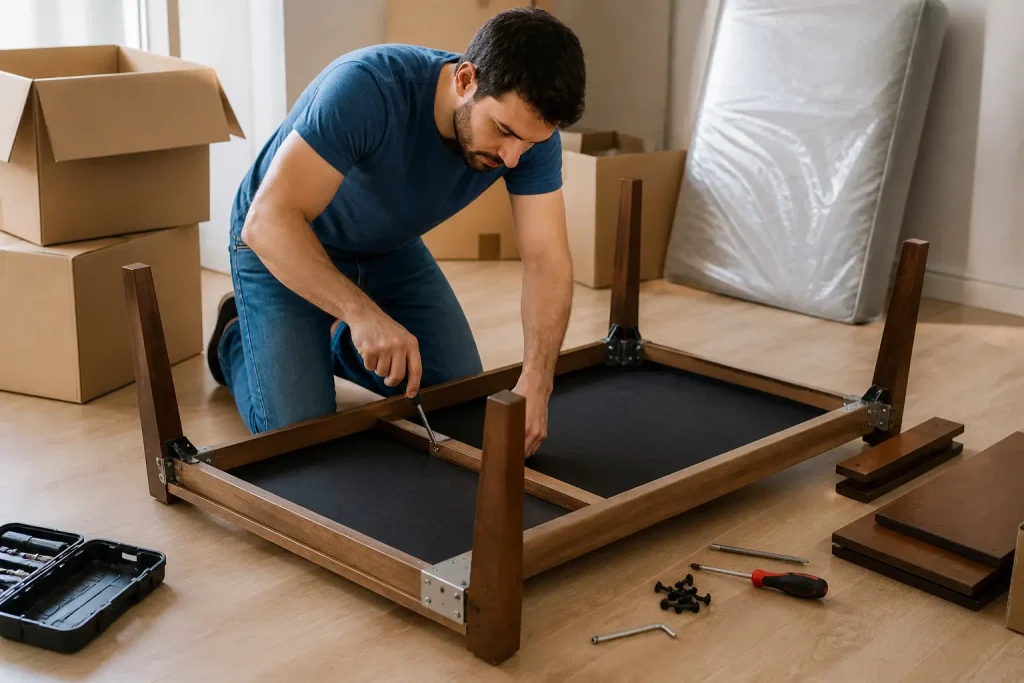
- Remove legs first
- Take out drawers
- Wrap the tabletop separately
Try not to over-disassemble if the structure is stable.
Wardrobes and cabinets
- Empty everything
- Remove shelves and rails
- Detach doors carefully
Large wardrobes should always be broken down into panels for safe transport.
Packing furniture after disassembly
Packing is just as important as disassembly. Poor packing can undo all your effort.
Here’s what works best:
- Wrap each panel individually
- Protect corners with padding
- Keep hardware bags attached to the item
- Stack flat pieces upright when possible
- Use straps or ties to prevent movement
If you need extra support, using a professional packing service can save time and reduce risk.
Practical example: A typical moving scenario
Let’s say you are moving a two-bedroom home.
You might:
- Disassemble both bed frames
- Remove legs from the dining table
- Take apart a large wardrobe
- Keep smaller items like bedside tables intact
This approach reduces space in the van and speeds up loading. It also lowers the chance of damage during transport.
Common mistakes to avoid
We often see the same issues during moves. Avoiding these can make a big difference.
- Not labelling screws and parts
- Mixing hardware from different items
- Forcing parts apart instead of loosening properly
- Skipping photos before disassembly
- Forgetting to protect edges and corners
Small mistakes can lead to delays when reassembling.
Should you disassemble furniture yourself or hire professionals?
Both options work. It depends on your situation.
Doing it yourself
Pros:
- Saves money
- Full control over the process
Cons:
- Takes time
- Risk of damage if done incorrectly
Hiring professionals
Pros:
- Faster and more efficient
- Less risk of damage
- Less stress on moving day
Cons:
- Additional cost
If you are already planning a move, combining disassembly with residential removals can make the whole process much smoother.
Final thoughts
Taking the time to properly disassemble furniture can save you hours of stress later. It helps prevent damage, makes transport easier, and ensures your furniture fits through tight spaces without issues.
At Norman Ferns Removals & Storage, we handle every part of the moving process with care. From careful packing to secure transport and even specialist moves, we make sure your belongings arrive safely. If you would rather not deal with heavy lifting or complex furniture, we are here to help.
You can explore our secure storage options or get support with your full move through our experienced team.
If you are planning a move soon, get in touch with us today. We will help you move with less stress and more confidence.