Moving day runs much more smoothly when the removals team can lift, protect and load your belongings without stopping to check what should stay, what should go, and what is safe to move.
The simple rule is this: if something could spill, break, leak, jam, hide valuables, add strain, or make furniture unsafe to carry, empty it before the team arrives. This guide explains what to clear, what can sometimes stay in place, and how to make those final checks without turning the morning into a rush.
Start with anything loose, liquid or personal
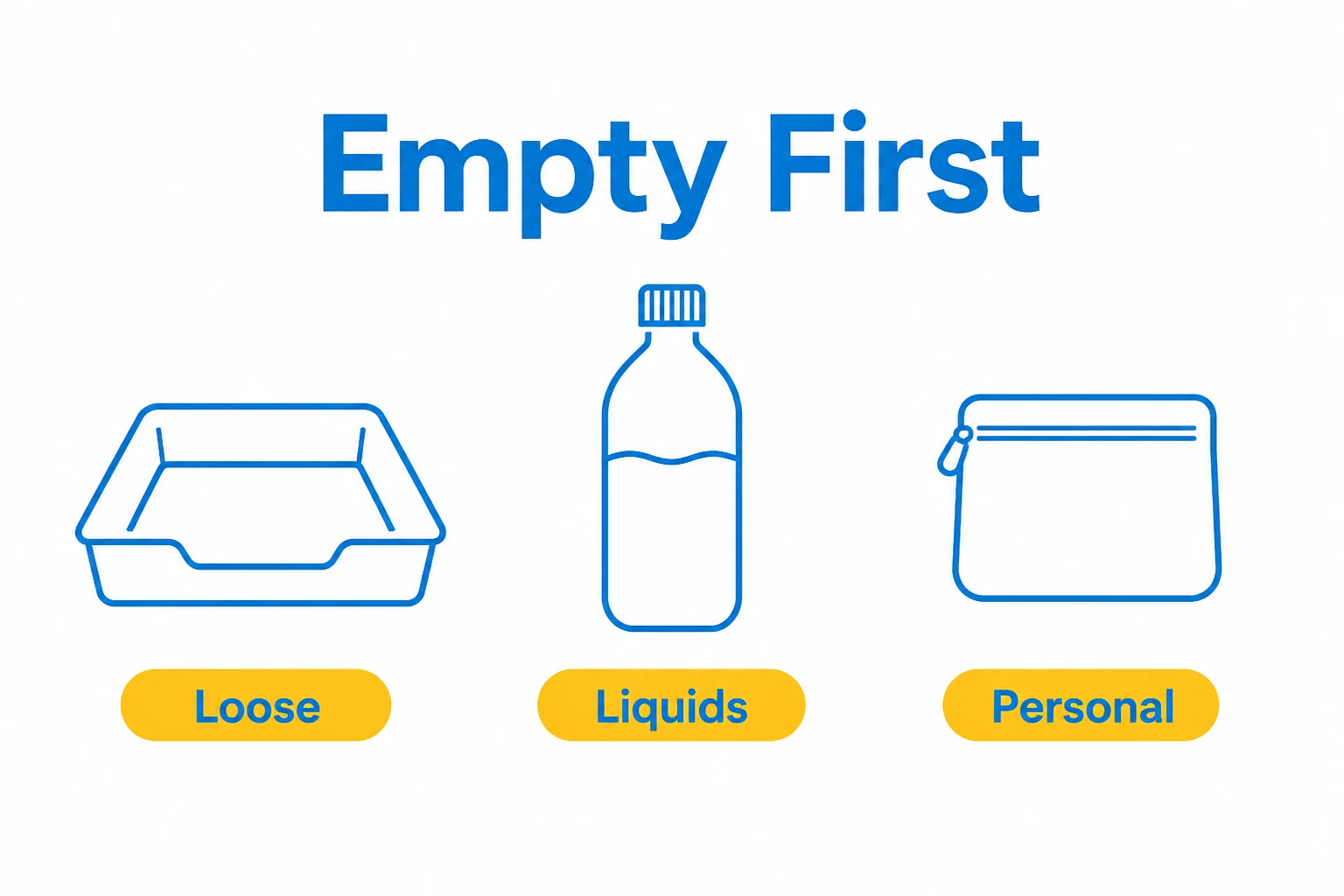
Before thinking about furniture, start with the items that can cause the most disruption if they are missed. Loose contents, liquids, personal documents, medicines, jewellery, cash, small electronics, chargers and keys should be removed from drawers, cupboards and surfaces before the removals team begins work.
Liquids deserve special attention. Cleaning sprays, toiletries, cooking oils, opened bottles, plant feed, paint, laundry products and anything with a loose cap should not be left inside furniture or packed casually into a mixed box. Even a small leak can damage other belongings, weaken cardboard, or make a surface slippery while items are being handled.
Personal items should stay under your control. This includes passports, bank cards, paperwork, prescriptions, glasses, hearing aids, work devices, sentimental keepsakes and anything you would not want packed away by mistake. Put these together in a bag or small case and keep it somewhere separate from the items being loaded.
If you want a broader moving day checklist alongside this room by room advice, Norman Ferns also has practical moving tips for preparing your home before removals.
Which drawers should be emptied
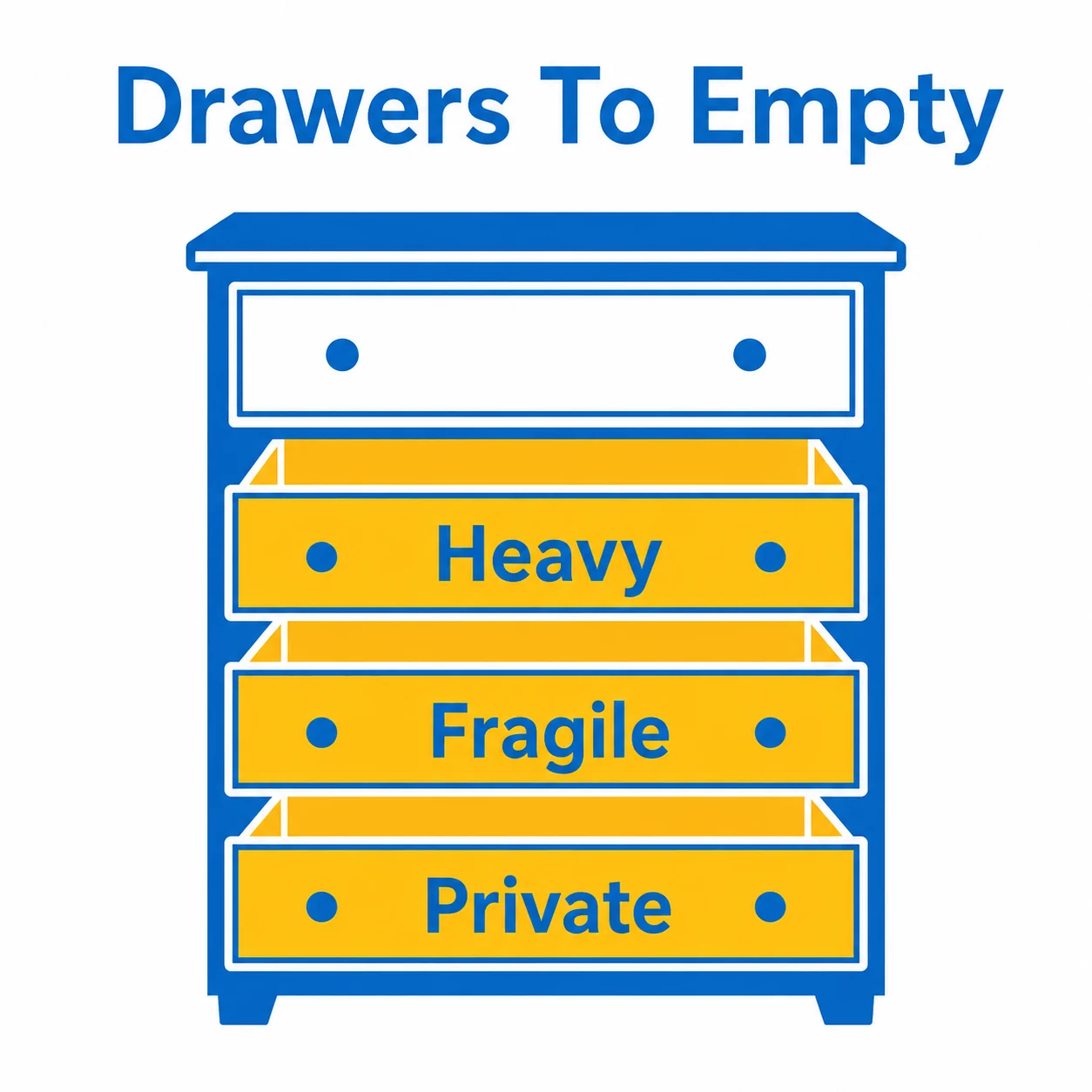
Most drawers should be emptied before removals arrive, especially if they contain breakable, loose, heavy, private or awkward items. Chest of drawers, bedside tables, desks, dressing tables, filing units and sideboards are much easier and safer to move when their contents have been packed separately.
There are a few reasons for this. Drawers can slide open while furniture is tilted. Internal runners can be damaged if the contents shift. Small items can wedge behind drawer backs. Extra weight can also make a piece harder to carry through doorways and around corners, even if the furniture itself looks manageable.
Clothing drawers are sometimes treated differently, depending on the item of furniture and the judgement of the removals team. Light soft clothing may be acceptable in a sturdy drawer unit if the piece is easy to move and the drawers can be secured. However, do not assume this will always be the case. If the drawer unit is large, old, delicate, flat packed, or already strained, empty it.
As a useful rule, remove everything from drawers that is hard, sharp, valuable, confidential, breakable, liquid, unusually heavy, or likely to move around. Socks and soft clothing may be the only contents worth asking about, and even then the final decision should be based on safe handling.
Cupboards, wardrobes and storage units
Cupboards and wardrobes should normally be cleared before moving day. That means clothes, shoes, bedding, towels, bags, accessories, paperwork, tools, hobby items and household supplies should be packed or set aside before the removals team begins.
Wardrobes are often larger and more awkward than they appear, particularly when they need to be moved through narrow spaces. Leaving items inside can make them unstable and can put pressure on shelves, hanging rails and fixings. Doors can also swing open if contents push against them from inside.
Kitchen cupboards should be empty, including food, crockery, pans, small appliances and cleaning products. Open food should be sealed or disposed of, and packets should not be left loose inside a cupboard that is being moved. Bathroom cupboards also need careful checking, as they often contain bottles, aerosols, razors, medicines and small items that can spill or disappear behind fittings.
For built in cupboards, decide clearly what is being taken and what is staying. Removals teams usually move the contents, not fixed cupboards themselves, unless a separate agreement has been made. Clear shelves fully so there is no last minute confusion over whether an item belongs to you, the property, or the next occupant.
Appliances that need emptying and preparing
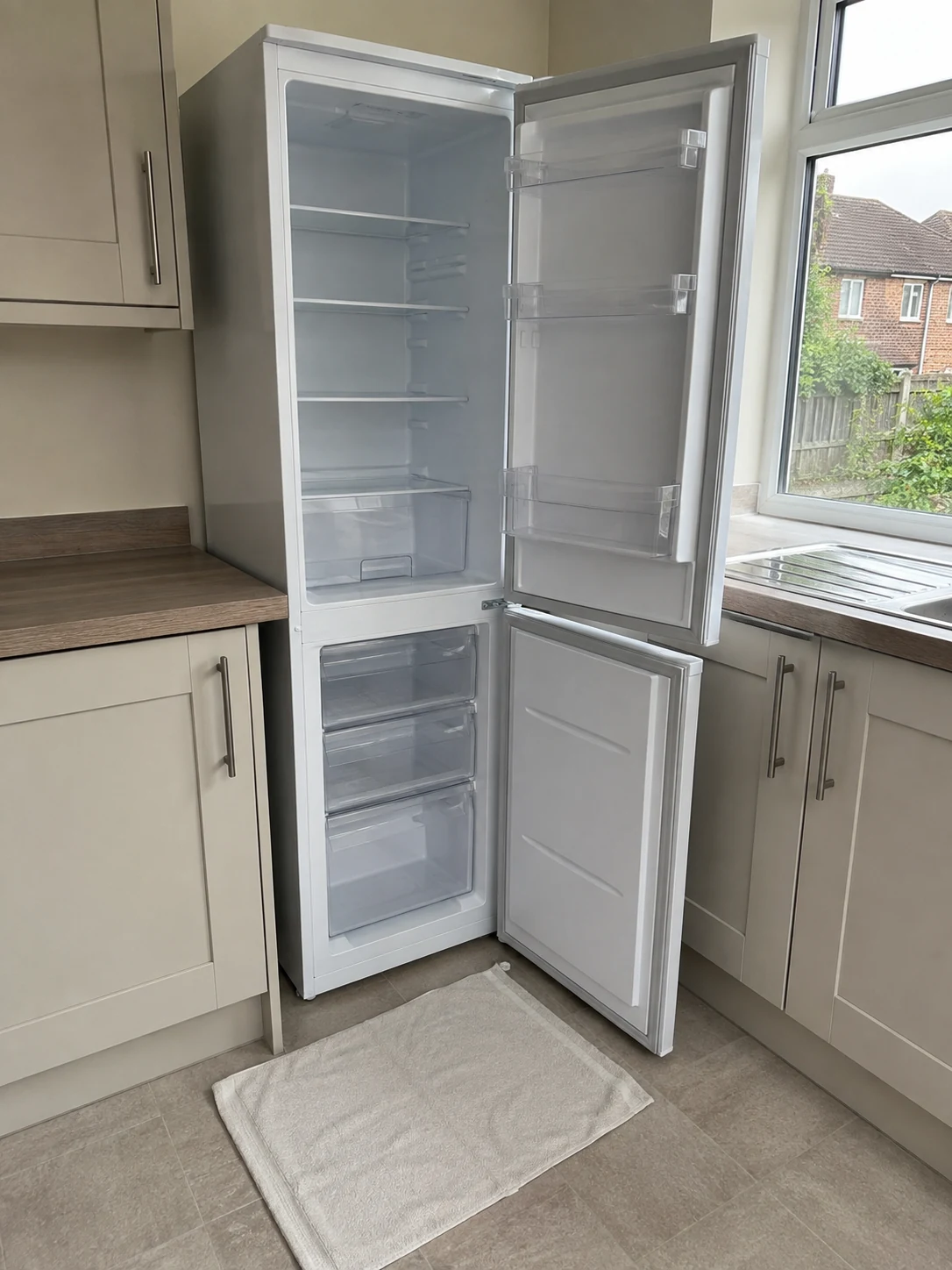
Appliances need to be empty, clean enough to handle, and ready to disconnect where appropriate. Fridges and freezers should be cleared of food in good time. Perishable items are best used up before the move, given away, or placed in a suitable cool bag if they are going with you separately.
Freezers should be defrosted before moving unless you have agreed a different plan. Ice can melt during handling and transport, which may cause leaks. Shelves, drawers and trays should be removed or secured if they could move around inside the appliance.
Washing machines, tumble dryers and dishwashers should be emptied completely. Check the drum, filters, detergent drawer and any hidden water areas you can safely access. If an appliance has a transit bolt or manufacturer guidance for moving, have that ready. The removals team may be able to advise on handling, but preparation often depends on the appliance and how it was installed.
Ovens, microwaves and small kitchen appliances should be cleared of trays, loose plates, food crumbs and accessories. Kettles, coffee machines and steam cleaners should be drained. Vacuum cleaners should be emptied where possible, especially if they contain dust, debris or liquid.
Items that should not be left inside furniture
Some items are easily forgotten because they sit inside furniture for months without being touched. Moving day is the moment to check carefully. Look inside ottomans, storage beds, footstools, blanket boxes, TV units, desks, side tables, console tables and garden storage.
Do not leave the following inside furniture:
- Glass, china, ornaments or framed items
- Coins, keys, jewellery, watches or small valuables
- Loose paperwork, contracts, certificates or personal records
- Tools, screws, batteries, chargers or cables
- Toiletries, cosmetics, candles or anything that can melt or leak
- Food, pet items, plant pots or soil
- Books, files, weights or dense hobby equipment
Storage beds deserve a separate mention because the contents are often out of sight until the base is lifted. Empty the storage area fully before the team needs to dismantle or carry the bed. The same applies to sofa beds, recliners and any furniture with hidden compartments.
Garden and shed items should also be checked for liquids, sharp tools, loose fixings and anything dirty or damp. If something needs cleaning before it can be safely handled with household items, deal with it before the removals team arrives.
What can sometimes stay packed in place
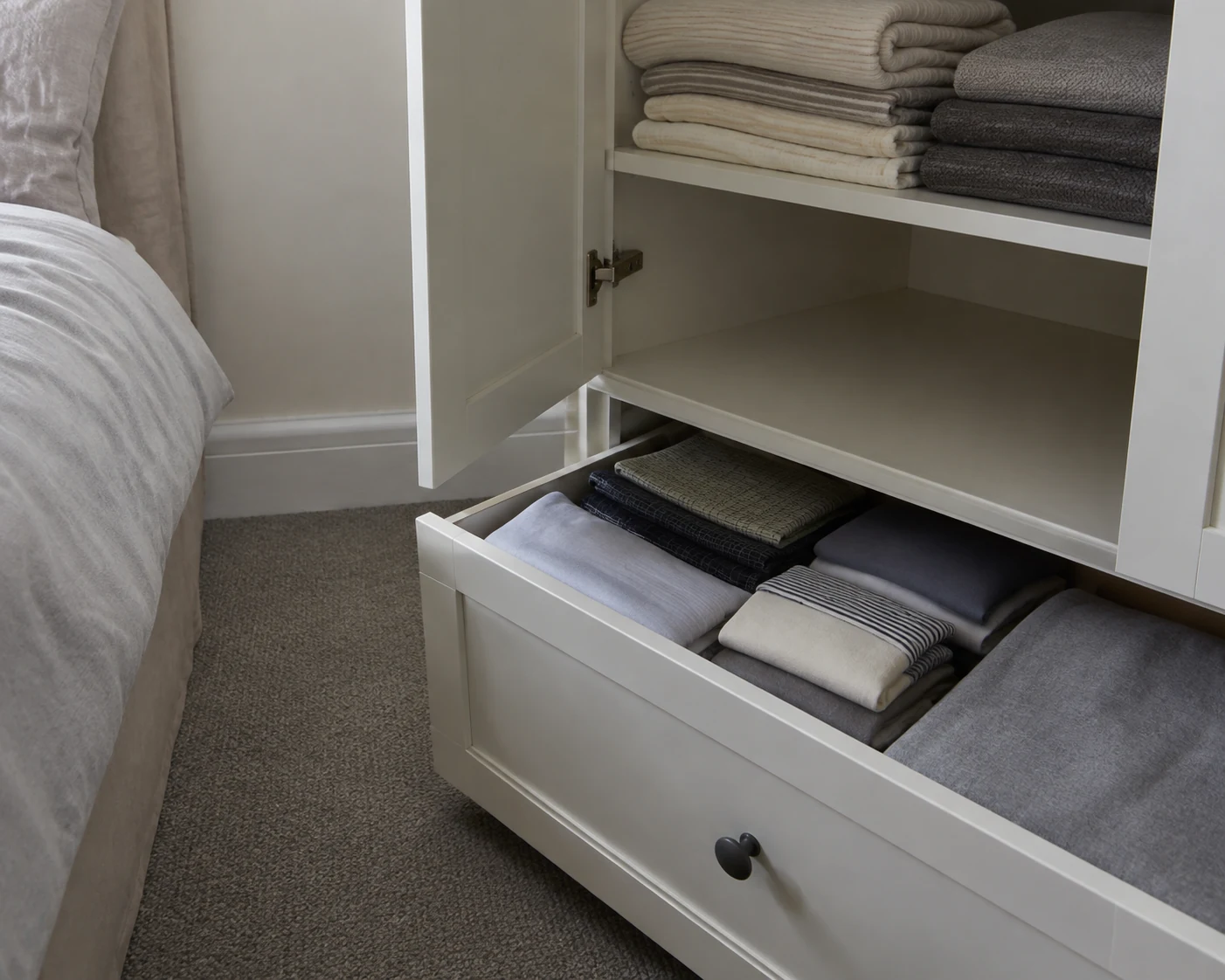
There are situations where a small amount of content can stay in place, but it should always be light, soft and unlikely to shift. Examples might include bedding in a suitable storage bag, cushions in a clean storage box, or soft clothing in a drawer that the removals team confirms is safe to move.
The key word is sometimes. A drawer that seems fine in one home may be unsuitable in another because of the furniture quality, staircase layout, access, distance to the vehicle, or the way the item needs to be angled. The team needs to protect both your belongings and the property, so their judgement on the day matters.
Do not leave anything inside furniture simply to save a box. It can slow handling if the team has to stop and ask for contents to be removed. It can also create avoidable risk if a drawer opens, a shelf gives way, or a hidden item gets damaged.
If you are unsure, separate the contents before moving day or ask in advance. A few minutes of preparation can make the whole process feel calmer and more organised.
- Empty anything loose, liquid, valuable, private, sharp, breakable or heavy before removals arrive.
- Most drawers, cupboards, wardrobes and storage furniture should be cleared before moving day begins.
- Appliances should be empty, drained where needed, and prepared according to their type.
- Soft clothing may sometimes stay in suitable drawers, but only if the team confirms it is safe.
- Keep essentials, documents, medicines, keys and valuables separate and under your control.
Frequently asked questions
Do I need to empty every drawer before removals arrive?
In most cases, yes. Hard, heavy, breakable, private and loose items should always be removed. Light soft clothing may sometimes stay in strong drawers, but only if the furniture is suitable and the removals team agrees.
Should wardrobes be completely empty?
Yes. Clothes, shoes, bags, bedding and loose items should be removed from wardrobes before they are moved. This makes the furniture lighter, safer to handle and easier to protect.
Do fridges and freezers need to be emptied?
Yes. Fridges and freezers should be emptied before moving. Freezers usually need defrosting too, unless you have agreed a specific plan with the removals team.
What should I keep with me on moving day?
Keep keys, documents, medicines, wallets, phones, chargers, jewellery, glasses and anything urgent or personal with you. These items should not be packed into furniture or loaded by mistake.
Need a calmer moving day?
Norman Ferns can help you prepare with practical advice before your move, so the team can protect, lift and load your belongings with care from the moment they arrive.