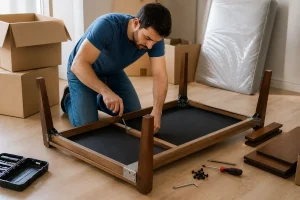

Heavy household items are often the things people worry about most on moving day. Books, tools, kitchenware, ornaments, files and small appliances can all seem simple to pack, until one box becomes too heavy to lift safely or starts to bulge at the base.
The aim is not to fit as much as possible into every box. The aim is to create stable, manageable loads that protect your belongings and the people handling them. Good weight distribution makes boxes easier to carry, easier to stack and far less likely to fail.
Why box weight matters more than box size
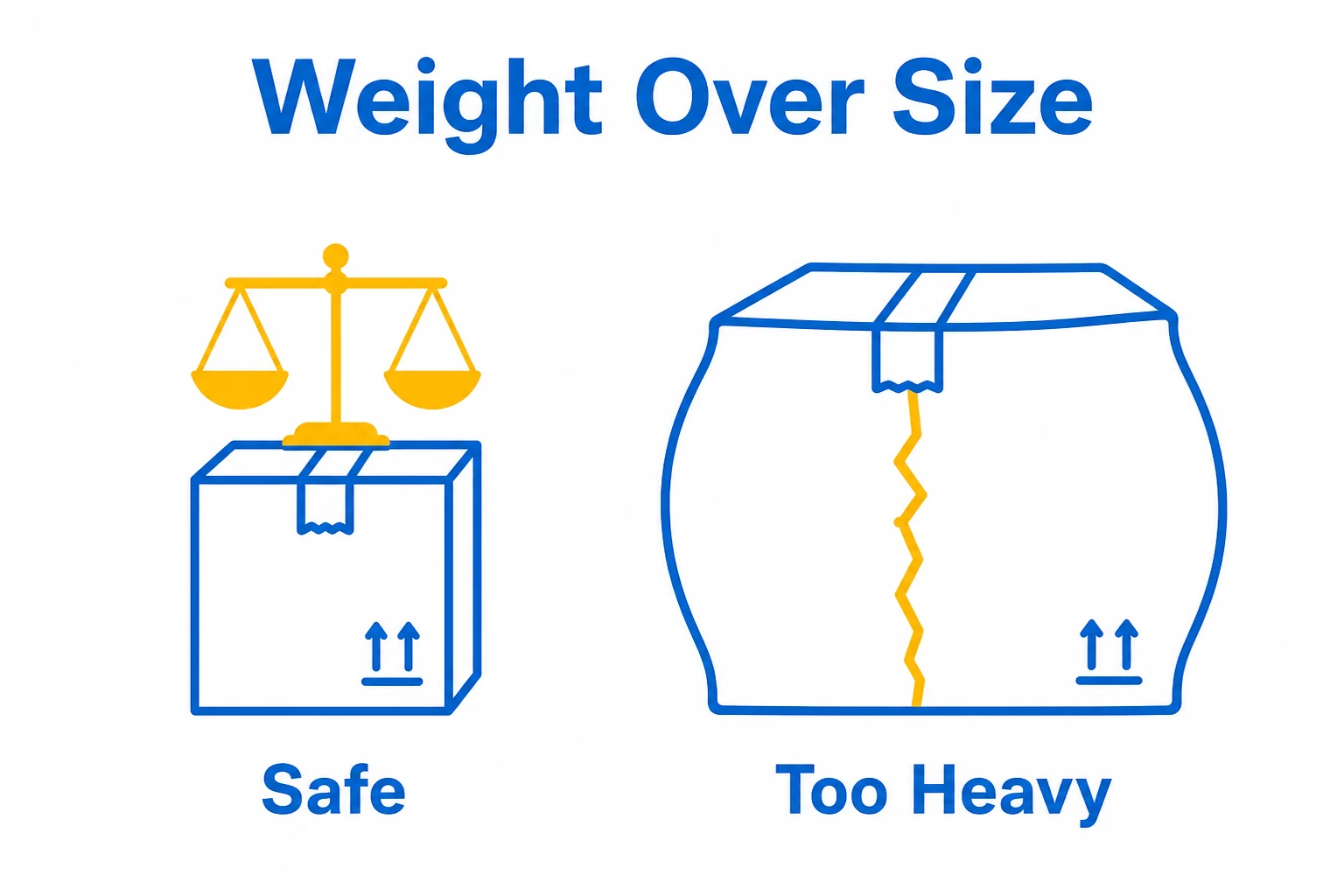
A large box can be useful for light items, but it is rarely the right choice for heavy household belongings. The bigger the box, the more tempting it is to keep filling it. That is where problems start. A box packed with books, crockery or tools may look tidy on the floor, but once lifted, the weight can pull through the bottom or make the sides collapse inwards.
Safe packing starts with asking a simple question: can one person lift this box without straining, twisting or needing to rush? If the answer is no, the box is too heavy, even if it still has empty space. Smaller boxes are usually better for dense items because they limit the total load naturally. They also give the box less room to flex under pressure.
It helps to think of every packed box as something that will be lifted more than once. It may be moved from a room to a hallway, from a hallway to a vehicle, from a vehicle to another room, and then possibly moved again while furniture is placed. A sensible weight at the packing stage makes every later step safer and smoother. Norman Ferns offers more practical packing tips for a safer move if you want to build a fuller plan before you start.
How to spread weight inside a box
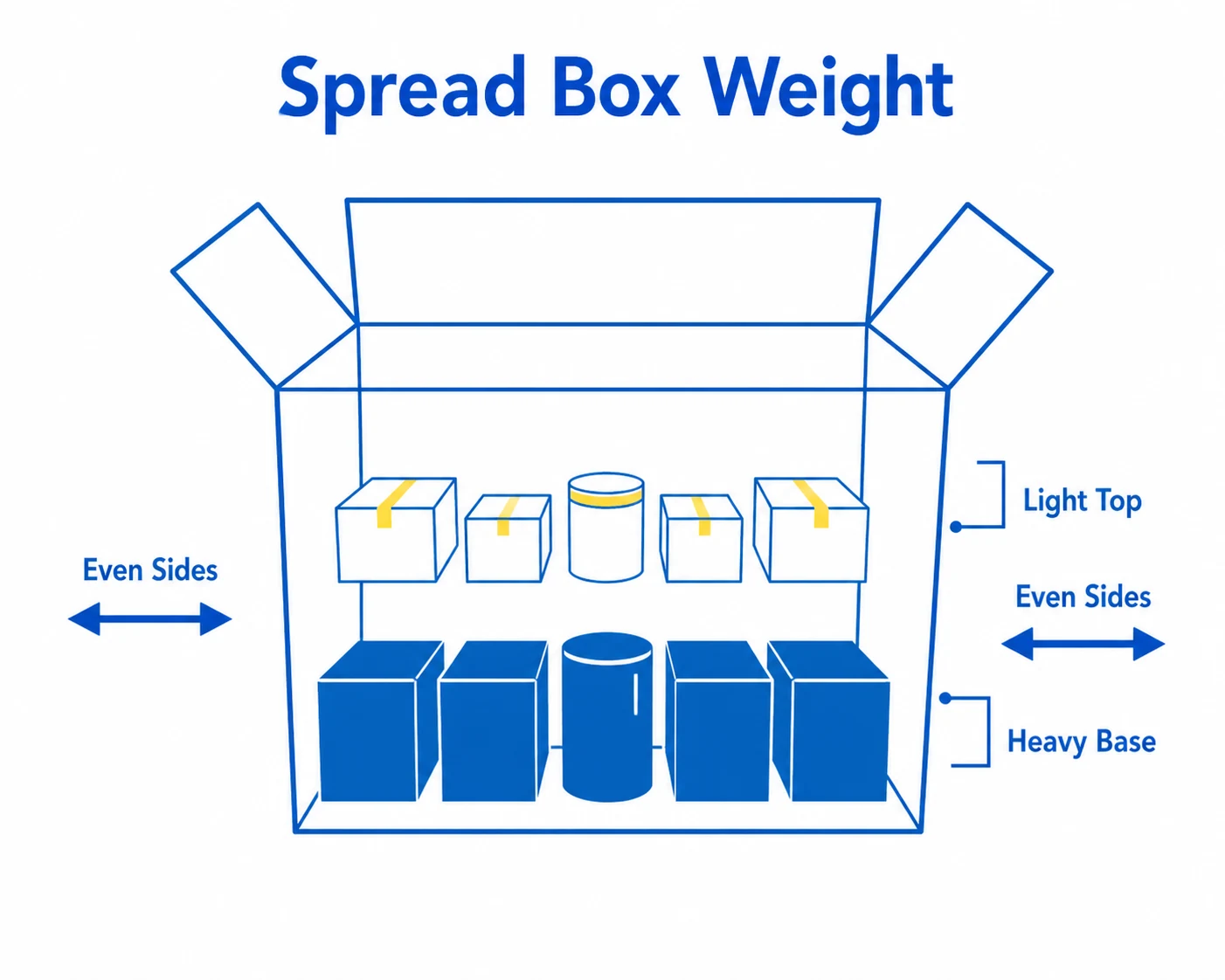
Good weight distribution is about balance. Heavy items should sit low in the box, close to the centre, with lighter items used to fill gaps above and around them. This helps the box stay upright when lifted and reduces the chance of it tipping sharply to one side.
A common mistake is packing all the heaviest items into one corner. That makes the box awkward to carry because the load pulls unevenly. It can also weaken one section of the base. Instead, place heavy items evenly across the bottom, with similar weights opposite each other where possible. If you are packing plates, books or files, keep them snug and upright where suitable, rather than creating a loose heap.
Once the base layer is stable, add lighter items to prevent movement. The goal is a box that feels solid but not overloaded. When you gently nudge it, the contents should not slide from side to side. Movement inside the box can damage items and make the whole load unpredictable when someone lifts it.
If a box already feels heavy before it is half full, stop there. Fill the remaining space with lighter belongings or packing material rather than more dense items. Empty space is not a failure. A box that can be lifted safely is far more useful than a full box that nobody wants to move.
The safest way to pack books, files and paperwork
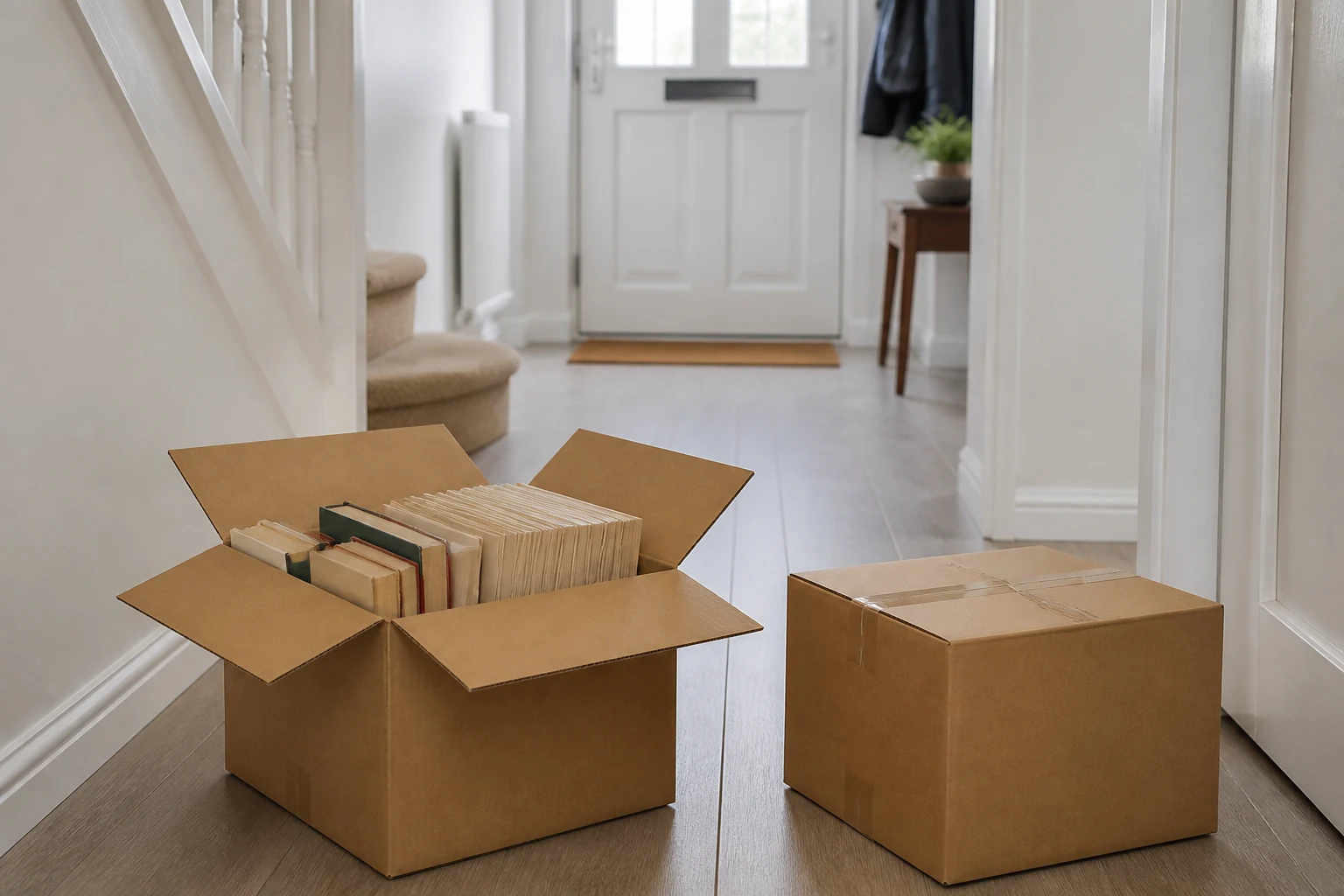
Books and paperwork are some of the most underestimated heavy items in a home. One book may not weigh much, but a full large box of books can quickly become unsafe. The same applies to folders, documents, records and photo albums.
Use small, strong boxes for books and files. Pack them in short rows, keeping the weight even across the base. Avoid stacking books in a deep pile inside a large box, as the combined weight can crush lower items and strain the cardboard. If you need to use a medium box, fill only part of it with books, then use lighter items such as cushions, linens or soft toys above.
Files and paperwork should be packed tightly enough that they do not slump, but not so tightly that the box bows at the sides. If a folder is heavy, spread similar folders across several boxes instead of grouping them together. Label each box clearly by room or contents so you do not have to open several heavy boxes just to find one document later.
For a wider approach to organising the sequence of packing, Norman Ferns has a helpful guide on simple packing steps for an easier move. Used alongside careful weight control, it can make the whole process feel less rushed.
How to pack kitchen items without creating unsafe loads
Kitchens contain many dense, fragile and awkward items, which makes weight control especially important. Plates, bowls, mugs, pans, small appliances, jars and utensils can all add up quickly. The safest approach is to separate heavy and fragile items into manageable groups, rather than trying to clear one cupboard into one box.
For crockery, keep loads compact. Plates can be heavy, so avoid filling a large box from bottom to top with them. Use a smaller box, build an even base, and keep the contents supported so they cannot shift. Heavier pans should sit at the bottom, with lighter kitchen items above. Do not place delicate items underneath cast iron cookware, large pans or small appliances.
Glass jars, bottles and pantry items need extra thought because they can be both heavy and breakable. Check lids, avoid packing anything that may leak, and spread the load across more than one box. If one box contains several heavy jars, keep the rest of the contents light.
The test is simple. Close the box, lift it a few inches and check how it feels. If it pulls to one side, feels unstable or makes you tense your back, repack it. A few extra boxes are better than a split box in the middle of a doorway.
Warning signs that a box is unsafe
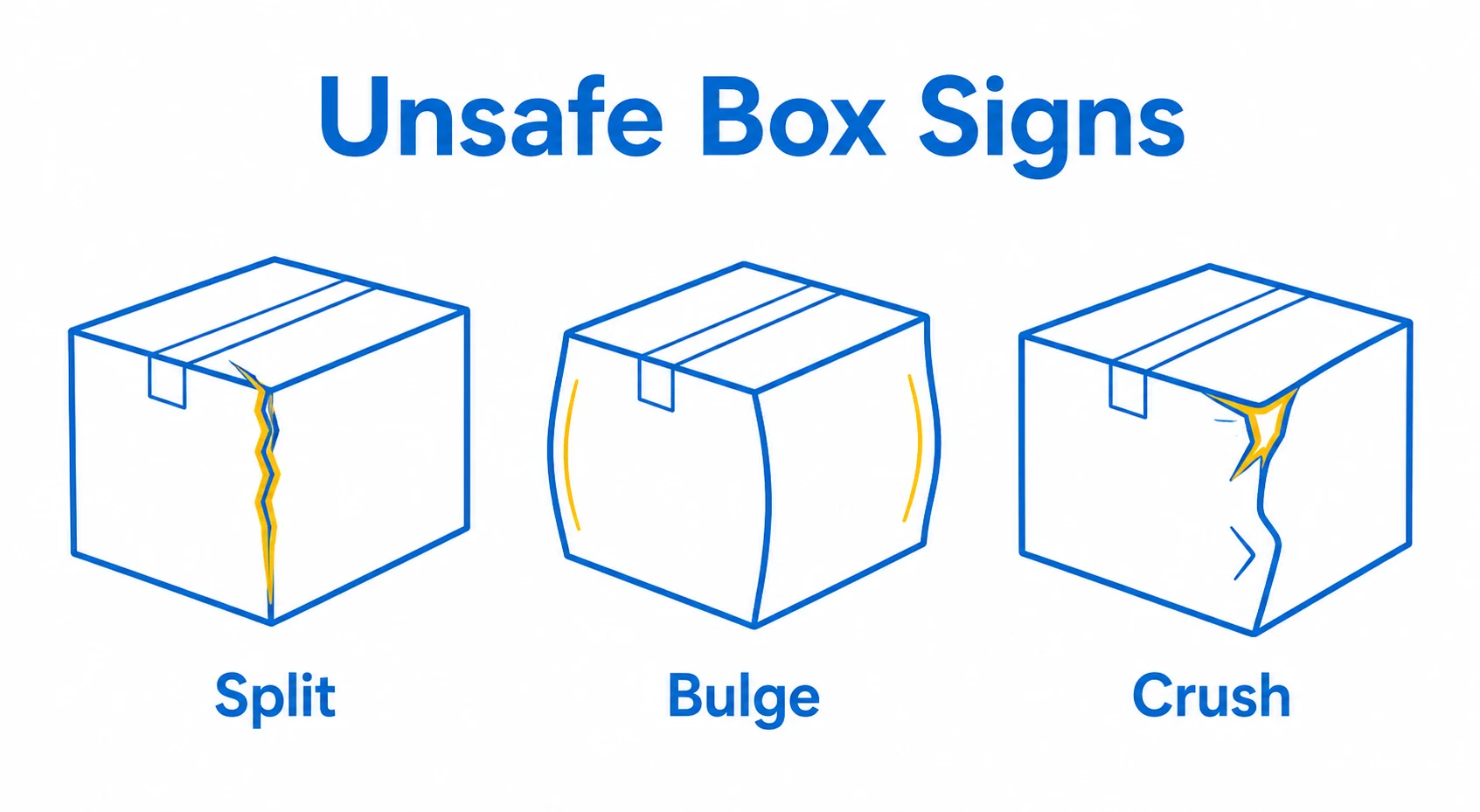
An unsafe box usually gives clues before it fails. Bowed sides, creased corners, sagging bases and handles that start to tear are all signs that the load is too much for the cardboard. If a box changes shape once filled, it should not be used for heavy items.
Listen as well as look. If the base crackles when lifted, or if tape starts to pull away from the seam, set the box down and divide the contents. Do not try to rescue an overloaded box with more tape alone. Tape can help support a box, but it cannot turn weak cardboard into a safe container for excessive weight.
Boxes that have already been used may be fine for light items, but they need checking carefully before carrying anything heavy. Look for damp marks, crushed edges, old tears and soft corners. A box stored in a garage, shed or loft may have weakened even if it still looks usable at first glance.
Professional support can be useful when you have lots of awkward, heavy or fragile belongings. Norman Ferns explains the difference between doing it yourself and getting help in its guide to professional packing services compared with DIY packing.
How to make boxes easier to lift, carry and stack
A well packed heavy box should be compact, level and clearly labelled. Start by reinforcing the base with good quality tape, especially along the centre join and across the edges. Then keep the contents balanced from the bottom up. Heavy items should not rise above the lower half of the box unless the total load remains light enough to handle comfortably.
Leave the top of the box flat. Overfilled boxes are harder to stack and more likely to crush. If items press against the lid, remove something or move it into another box. A flat top helps boxes sit securely together and reduces pressure on fragile contents.
Use clear labels such as heavy, books, kitchen, fragile or two person lift where appropriate. Labels are not just for finding items later. They help anyone handling the box understand how to approach it. A box marked heavy can be lifted with more care, placed lower in a stack and kept away from delicate items.
If you would rather have experienced help with heavier or more delicate items, Norman Ferns provides a professional packing service that can take care of the practical details while keeping your move organised.
- Use smaller boxes for dense items such as books, files, pans and crockery.
- Keep heavy items low, central and evenly spread across the base of each box.
- Do not rely on tape to fix an overloaded or weakened box.
- Fill spare space with lighter items so contents stay stable without becoming too heavy.
- Check every box by lifting it briefly before sealing and stacking it.
Frequently asked questions
How heavy should a moving box be?
There is no single perfect weight because people, boxes and contents vary. A good rule is that one person should be able to lift the box calmly, without straining or twisting. If it feels difficult before you have even sealed it, divide the contents into smaller loads.
Is it better to use one big box or several small boxes for heavy items?
Several small boxes are usually safer for heavy household items. They are easier to lift, less likely to split and simpler to stack securely. Large boxes are better kept for light belongings such as bedding, pillows and soft furnishings.
Can I mix heavy and light items in the same box?
Yes, and it is often the safest approach. Put heavy items at the bottom, spread them evenly, then use lighter items above and around them to stop movement. Avoid placing heavy items on top of fragile belongings.
What should I do if a packed box starts to bulge?
Unpack it and reduce the weight. Bulging sides or a sagging base mean the box is under too much stress. Moving it anyway risks damage to your belongings and makes the box harder to carry safely.
Need help packing safely?
Norman Ferns can help you plan and pack with care, so heavy household items are protected, balanced and ready for moving day.